
VIETNAM NATIONAL UNIVERSITY – HO CHI MINH CITY
UNIVERSITY OF SOCIAL SCIENCES AND HUMANITIES
FACULTY OF ENGLISH LINGUISTICS & LITERATURE

Portfolio practicum
by
Group 2.1
matesol 2022
supervisor: Phó Phương Dung, Ph.D.
HO CHI MINH CITY, JUNE 2024
Nguyễn Huỳnh Anh (22814011103)
MEMBERS



Nguyễn Thị Vân Anh (22814011106)
Tạ Hạnh Diễm
(22814011111)
Nguyễn Thành Đạt (22814011115)
Lưu Dịch Lâm
(22814011122)
table of contents
- The Institutions’ Vision-Mission Statement
- Application of TESOL/ELT Knowledge
THE REVISED LESSON PLAN
STUDENTS
- Students’ age: 18-19
- Students’ proficiency level: Pre-intermediate (A2-B1)
- Students’ characteristics: Students are non-English major
SETTING
- Institution: English 3 – D5 class, Thai Binh Duong University
- Class size: 30
- Duration: 50 minutes
PREVIOUS LESSON
- Chapter/Unit: Chapter 3B
- Topic: Eating out
- Language focus/Sub-skill:
- Grammar: Past simple and past continuous
- Pronunciation: Weak and strong forms of was and were
CURRENT LESSON
- Chapter/Unit: Chapter 3C
- Topic: Eating out
- Language focus/Sub-skill:
- Listening: Listen for reasons
- Vocabulary: Eating out at a restaurant
Procedure
Stages & Time | Stage aim(s) | Class activities | Grouping | Anticipated problems and solutions | |
Teacher’s activities | Students’ activities | ||||
Warm-up 4 mins(H. Diễm) | To engage Ss in the lesson and give certain hints as ideas for the coming class activities. | ACTIVITY 1: - T instructs Ss to sit in 5 pre-assigned groups. - T shows 2 pictures, one of eating out and one of eating in (See Appendix) and asks: “Which one do you prefer?” - T elicits the answers from Ss. - T check Ss’ understanding of the word ‘Eating out’. - T introduces: Today’s topic – EATING OUT. | Ss pay attention to the screen for the questions and the pictures.Ss share their answers. | Whole-class | Ss show a lack of cooperation.→ Solution: call for a specific student instead of waiting for a volunteer. |
Listening 22 mins(H. Diễm & V. Anh & H. Anh) | To let Ss practice listening skills | ACTIVITY 2: (Task 3/p.40, 9 mins) - T gives an example for finding the keywords in listening question no.1. T elicits the keywords for the rest of the listening questions from Ss. - T corrects Ss’ answers. - T plays the audio. - T elicits Ss’ answers for Task 3 and shows the correct answer. | - Ss find and highlight keywords in the listening questions. - Ss check their highlighted keywords. - Ss listen to T’s explanation. - Ss listen and finish Task 3. - Ss provide T with their answers and take note of T’s feedback. | Individual | Ss show a lack of cooperation.→ Solution: call for a specific student and instead of waiting for a volunteer. There’s a problem with the audio system.→ Solution: prepare back-up files and a portable speaker. |
To provide Ss with the focus skill: listening for reasons | ACTIVITY 3: (Task 4/p.40, 13 mins) - T explains the focus skill: listening for reasons. - T asks Ss phrases that indicate reasons. - T elicits the keywords for the listening questions in Task 4. - T plays the audio. - T elicits Ss’ answers for Task 3 and shows the correct answer. - T answers Ss’ questions (if any). - T lets Ss listen to the recording once more (only the answers of Task 3). | - Ss listen to T’s lecture. - Ss volunteer to list phrases that indicate reasons. - Ss find and highlight keywords in the listening questions. - Ss listen and finish Task 4. - Ss provide T with the answers. - Ss raise questions (if any). | |||
Vocabu-lary 23 mins (H. Anh & T. Đạt & D. Lâm) | -To check Ss’ prior knowledge of the target vocabulary - To provide Ss with new vocabulary about the topic of eating out | ACTIVITY 4: VOCABULARY LEARNING (6 mins) - T introduces the vocabulary section in the lesson.First, T shows Ss a slide with a/some picture(s) and a word with only the initial/just some of the letter(s). - T asks Ss to guess the word based on the clues they get from the picture(s). - T invites some Ss to give their answers.After Ss guess the word, T shows the word, its definition, its pronunciation and example sentences containing the word.Based on Ss’ reaction, T assesses Ss’ prior knowledge of the word and may choose to focus on the word or go through it quickly. - T repeats the process until the last vocabulary. | - Ss listen carefully. - Ss try to guess the words.Ss give T the answers.Ss pay attention. | Whole-class | Problem: Limited participation → Solution: use bonus points and rewards to encourage participation. |
To consolidate Ss’ knowledge of the vocabulary they have just learned | ACTIVITY 5 VOCABULARY GAME: RING THE GOLDEN BELL (10 mins) - T introduces and gives Ss instructions of the game:Each group receives a board and a marker. - T shows Ss the questions one by one; 7 questions in total (and one example).Each group has 20 seconds to answer the question and write down their answer on the board.As soon as they finish, the groups have to raise their answers for the T to see.Groups with the correct answer get 1 point. The first group to raise their answer and get it correct gets 2 points.After 7 questions, whichever group scores the highest points will receive a reward. - T hosts the games.While hosting the games, T will clarify anything unclear. | Ss pay attention to T’s instruction.Ss participate in the game. | Group work | ||
To give Ss an opportunity to practice the vocabulary they have just learned by engaging in a speaking task about the topic of restaurant experience | ACTIVITY 6: PRACTICE (5 mins) - T asks Ss to work in pairs to discuss the topic in Task 10/p.40. - T asks Ss to read the question and shows Ss a sample answer of the topic. - T asks Ss to take notes of their restaurant experiences on their own in 1 minute. - T asks Ss to discuss the topic in pairs in 2 minutes. - T invites one student randomly to share his restaurant experiences with the class in 1 minute. - T gives feedback on students’ speaking. | - Ss read the question and the sample answer of the topic. - Ss take notes of their restaurant experiences on their own in 1 minute. - Ss to discuss the topic in pairs in 2 minutes. - S shares his/her restaurant experiences to the class in 1 minute. - Ss listen to T’s feedback on their speaking. | Pair work | - Problem: Some students may struggle in organizing ideas to answer the questions in the speaking topic → Solution: T can help students brainstorm their ideas before Ss start to take notes and discuss. | |
Wrap-up 1 min(D. Lâm) | To provide a summary of today’s lesson | ACTIVITY 7: WRAP-UP (1 min) - T wraps up the lesson, summarizes the content of the lesson and asks Ss to review the lesson at home. | Ss check the points according to T’s summarization. | ||
REFERENCES
Bryson, E., & Lee, C. (2021). Voices A2/B1 – Student’s book. National Geographic.

Part II. MICRO-TEACHING
2.1 Preparation
- Preparation prior to the trip
Preparing for our teaching trip was a journey of rigorous and collaborative effort. Our team spent many late nights meticulously dividing tasks and addressing every detail. These sessions were crucial for anticipating challenges and ensuring we were all aligned. Reflecting on those times, they were filled with long nights and countless meetings, all while managing our diverse teaching schedules. It was a demanding period, but looking back after completing the Practicum program, we see how essential it was. Our commitment and teamwork during those preparations laid a solid foundation for the meaningful and informative activities we conducted in Nha Trang City.
In developing our lesson plan, we initially sought feedback from our supervisor, Dr. Pho Phuong Dung, through two informative meetings. These discussions proved invaluable in refining our activities. A significant area of focus was the listening segment, which required multiple adjustments due to our uncertainty about the students’ proficiency at the destination university. To minimize risks, our instructor suggested a tiered approach: students would first attempt to answer questions based on listening alone. If they struggled, we would provide a script with key answers blanked out. If they still had difficulty, the full script would be revealed. This scaffolded approach aimed to progressively build their listening skills and confidence, ensuring we had a solid backup plan in case the students’ proficiency levels differed from our expectations.
To make the lessons more engaging, we decided to include a mini-game, as suggested by our supervisor. This concept was warmly welcomed as it promised to cultivate a lively classroom atmosphere and maintain student interest. However, incorporating this element required us to be more selective about the content we covered, emphasizing the importance of listening practice over other activities. A significant adjustment we made was to omit the warm-up speaking activity, recognizing its value but understanding it wasn’t pivotal to our primary goal of enhancing listening skills. Additionally, we revised our approach to vocabulary teaching. Instead of conventional matching and gap-filling exercises, we opted for a controlled practice game. This change aimed to increase student interaction and prevent the repetition of similar exercises, thereby enhancing engagement and retention. Furthermore, we offered additional hints or simplified steps for challenging tasks to ensure all students could participate effectively. Conversely, if an activity seemed too simplistic, we introduced more intricate elements to sustain student interest and stimulate their intellectual curiosity. As a result, we found that these adjustments significantly boosted students’ mood and attention levels.
Besides the lesson plan, thanks to our instructor’s advice, we didn’t forget to meticulously prepare all essential materials—small boards, markers, speakers, and slides—to ensure a seamless delivery. Anticipating potential challenges, we carefully brought backup equipment like an extra laptop and a portable speaker. This foresight proved invaluable in managing unforeseen technical issues, confirming the effectiveness of our instructor’s advice. This initial careful preparation was a major reason for the later teaching process to proceed smoothly.
- Classroom observation
The day before our actual teaching sessions, closely observing classroom dynamics proved essential. By attentively monitoring how students responded to different activities, we were able to gain valuable insights to refine our teaching approach and make timely adjustments to enhance their engagement.
Observation Goals List
Shortly before the observation, our group had a quick discussion to identify some areas that need particular attention, as well as some questions we may need to ask the teacher of the class. We noted that the exact class to be taught was not observed but instead another class with similar student demographics. The group then decided to take into consideration some factors such as the actual number of students, students’ proficiency level, students’ engagement and in-class participation, the teacher’s teaching strategies, and the application of technology in the classroom.
Detailed Notes of the Observed Classes
With those goals in mind, we were able to focus and obtain the necessary information after taking detailed notes. Fortunately, we were allowed to observe two classes. Although our group was assigned to observe the class of instructor Ngo Ha Giang (Class 1), the class ended early so we moved on to the class of instructor Nguyen Tran Hoai Phuong (Class 2) for the remainder of the time.
The first thing we noticed was that the teachers had more time allotted to their lessons than us students-teachers. In particular, we were required to deliver one subunit, which is subunit 3C, in the book within 50 minutes. Teachers, on the other hand, could be flexible and arrange more time for sections that they consider difficult or important to their students. This made us realize it would be challenging for us in our micro-teaching, as the pace would be quicker, and the students might not get used to it.
In terms of student engagement, Class 1 was primarily characterized by teacher talk and limited student-initiated interaction, resulting in a less active learning environment. Conversely, Class 2 encouraged more student interaction, with activities designed to actively involve students in the learning process, promoting a more participatory and engaging classroom atmosphere.
Regarding the teaching methods, both classes incorporated traditional and interactive teaching methods. Class 1 focused more on teacher-centered approaches, such as checking individual work and calling students to the board, whereas Class 2 emphasized student participation and collaboration through interactive activities like discussions and group work.
Both classes integrated technology to support learning, though in different ways. Class 1 utilized PowerPoint presentations and the Zalo messaging app to connect with students, as well as encouraging the use of dictionaries to improve language learning. Class 2 adopted a multifaceted approach to technology, incorporating slides, printed handouts, and the book’s software, providing a varied and rich learning experience that catered to diverse learning preferences and enhanced overall engagement.
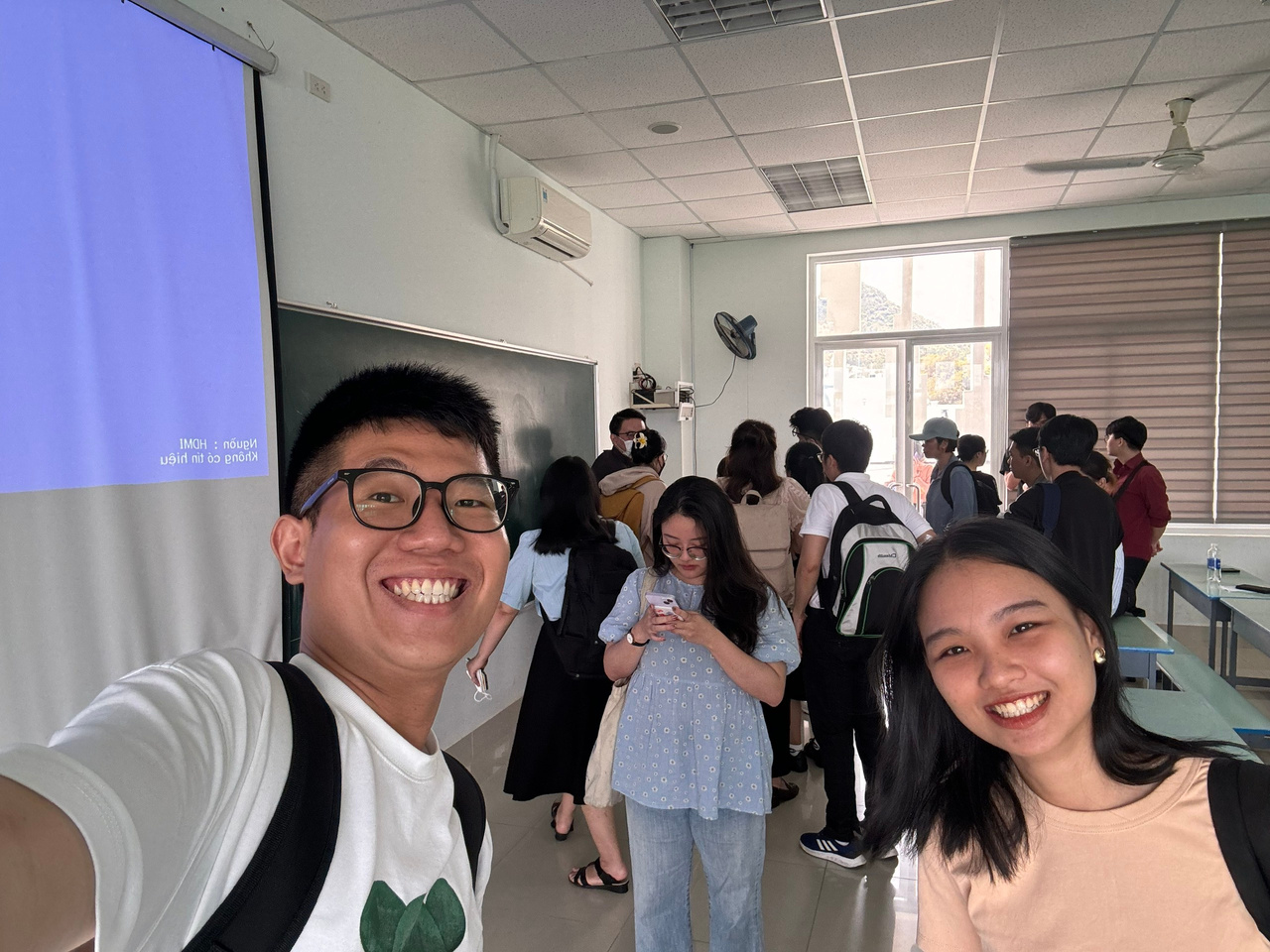
Wrapping up an informative
observation session
at TBD University
After observing the classes, we assumed that students were accustomed to traditional teaching methods, as seen in the teachers’ class. Most students were not familiar with a class conducted entirely in English, implying that their listening and speaking skills might be restricted. Additionally, students tended to be shy, which could impact their willingness to participate actively in class discussions and activities.
Understanding these expectations helped us tailor our lesson plan to better suit the students’ needs and capabilities. We then anticipated several potential problems and got prepared for possible issues such as internet connection and speaker problems. We also prepared ourselves for the possibility of a quiet, non-interactive, and uncooperative class, given the students’ shyness and unfamiliarity with English instruction. Managing teaching time strictly was also essential to ensure that all planned activities could be completed within the allotted time.
- Lesson plan revision
Based on our observations, we had to modify the lesson plan to better align with the actual situation. We held a quick meeting online to agree on what needed to be changed and who would be responsible for reviewing which part.
The first thing we adjusted was the amount of time spent on the warm-up activity as we realized we might not have enough time to operate due to the students’ level of proficiency. It was also modified to a simpler task. Instead of answering personal questions, the students would only have to identify the meaning of the keyword “eating out” for the student-teacher to lead into the lesson. Consequently, the other parts assigned to each member of the group shifted and we had to plan the timing for the whole lesson again.
The next element was the audio for listening tasks. This is unironically the most challenging problem for our group as the class time was limited to 50 minutes but the audio was rather long, let alone having to have it played multiple times if the students could not get the answer the first time they listened. After discussion and taking the supervisor’s suggestions into consideration, we decided to reduce the number of questions for each listening task by two. We also cut the audio into several shorter parts, each containing the answer to one question so that it would save us time while replaying those parts. The slides for the listening tasks also included more clues and suggestions.
In terms of vocabulary teaching, we decided to replace the dictionary definitions with simpler words and phrases, which are easier for students to understand. This applies to the examples as well. Instead of examples taken from the dictionaries, we provided the students with shorter sentences that they could later make use of in the speaking task. Besides, we changed the content of the minigame, which was used to check students’ understanding of the vocabulary they just learned, by reducing the number as well as the difficulty of the questions to ensure the engagement of all students.
Last but not least, we also concluded that full English instruction would be impossible, and that we would have to use Vietnamese to explain and support the students.
However, there remained some problems that made us confused during the teaching. The first problem is the grouping. Although we anticipated that the whole class would not be present and there would be some students absent, we could not use the original study groups as some groups outnumbered the others to the point it would be unfair for activities or the game. As a result, we spent a lot of time arranging the groups at the beginning of the lesson. Nevertheless, during the micro-teaching, we still had to divide the groups one more time as the ones previously arranged no longer worked.
The next problem is the operation of technology. As our slides were downloaded from Google Slides to a local folder, some parts of the audio didn’t play although we already checked them prior to the micro-teaching. Therefore, we had to go online for the audio, and it took some of our valuable time. Another technology problem, which we didn’t anticipate, was the unfamiliarity with the user interface of the laptop, as it was borrowed from the other group (2.2) after we decided to merge the slides for better lesson delivery between the two groups. This led to a few dead times during the lesson, disrupting the teaching and learning pace.
MICRO-TEACHING SESSION
In general, the micro-teaching went quite smoothly. Most of what we expected in the beginning was true, as most students seemed to struggle with relatively demanding tasks but could still follow instructions in basic English and moderate speaking speed. For that reason, for complicated instructions, we explained again in Vietnamese and the students got the ideas perfectly. The students were shy at first, but as the lesson went on, they became more active and engaged. Overall, the class was cooperative and participated in the activities as actively as they could. In the end, we did quite well and managed to complete the lesson on time, which made us delighted as we considered time management the biggest challenge for us.
During the lesson, we also noticed that the students’ level was uneven. Some students were more dominant in activities, leading to certain groups being more engaged. The teaching pace might feel rushed to some students at lower levels compared to the general level of the class, which is pre-intermediate. Those problems reminded us of the importance of flexibility and thorough preparation in future teaching practices.
Part III. THE WORKSHOP ROLES & RESPONSIBILITIES CHECKLIST
3.1 WORKSHOP AT THAI BINH DUONG UNIVERSITY – POSTER PRESENTATION
No. | Students names | Responsibilities | ||||
Content Planning | Design | Review | Revise | Presentation | ||
1 | Nguyễn Huỳnh Anh | x | x | x | x | x |
2 | Nguyễn Thị Vân Anh | x | x | |||
3 | Tạ Hạnh Diễm | x | x | x | x | x |
4 | Nguyễn Thành Đạt | x | x | x | x | x |
5 | Lưu Dịch Lâm | x | x | |||
3.2 SEMINAR AT VIETNAM NAVAL ACADEMY
No. | Students names | Responsibilities | ||||
Content Planning | Design | Review | Revise | Presentation | ||
1 | Nguyễn Huỳnh Anh | x | x | |||
2 | Nguyễn Thị Vân Anh | x | x | x | x | x |
3 | Tạ Hạnh Diễm | x | x | |||
4 | Nguyễn Thành Đạt | x | x | |||
5 | Lưu Dịch Lâm | x | x | x | x | x |
Part IV. REFLECTION
4.1 Group Reflection
DESCRIPTION OF THE INSTITUTIONS’ VISION-MISSION STATEMENT
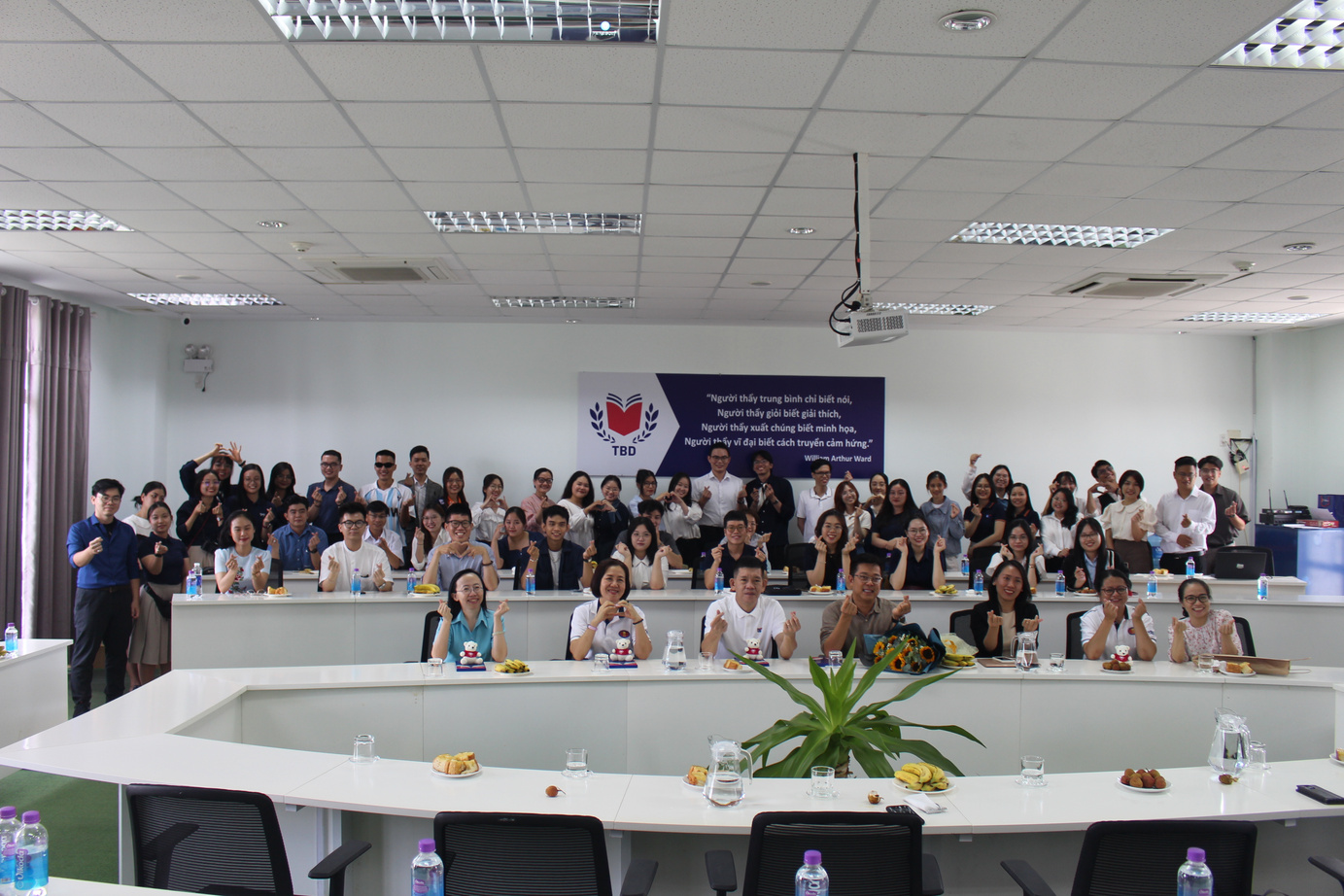
MATESOL 2022 Practicum Group with Representatives from TBDU
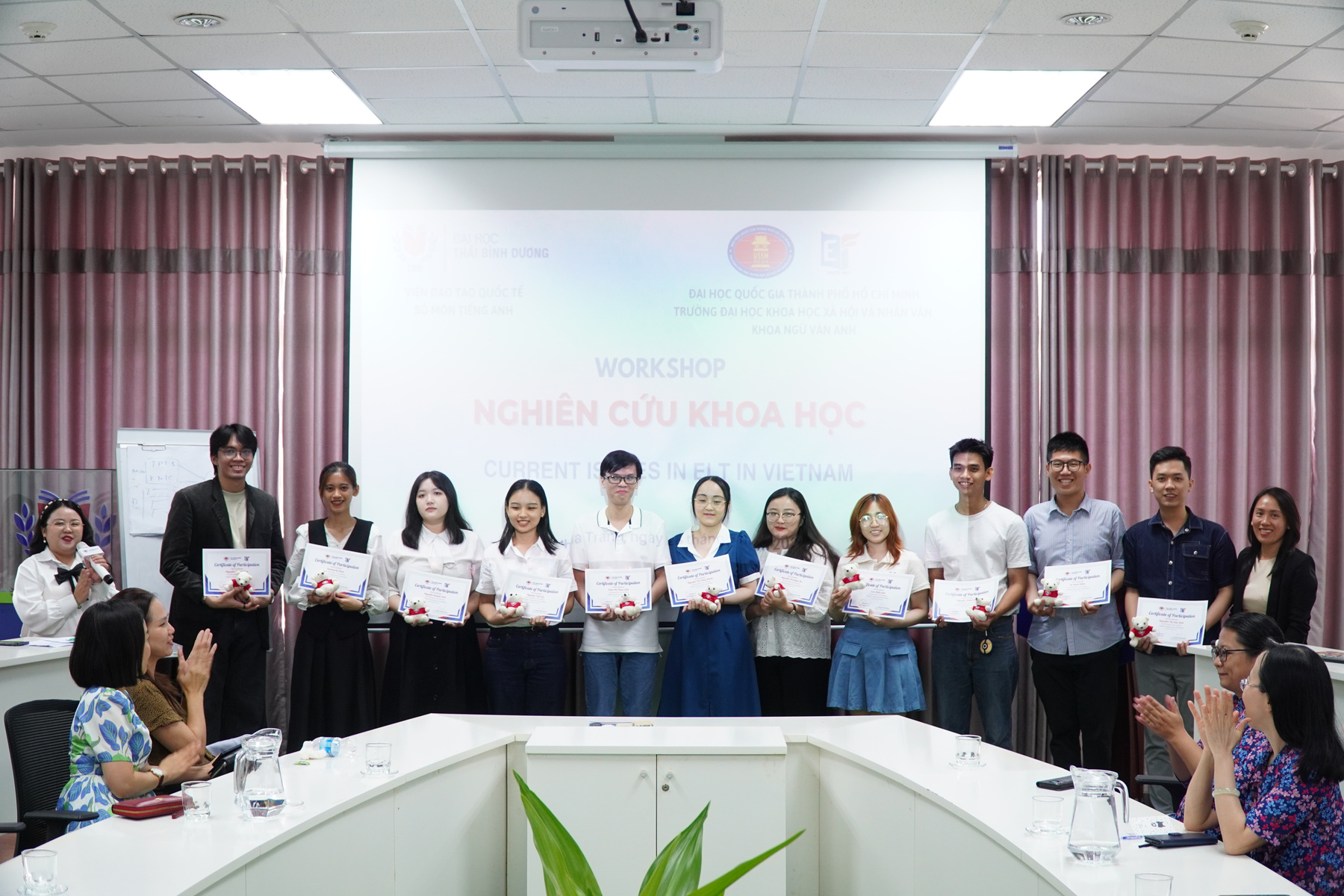
Group 2 receiving participation certificates and souvenirs from TBDU
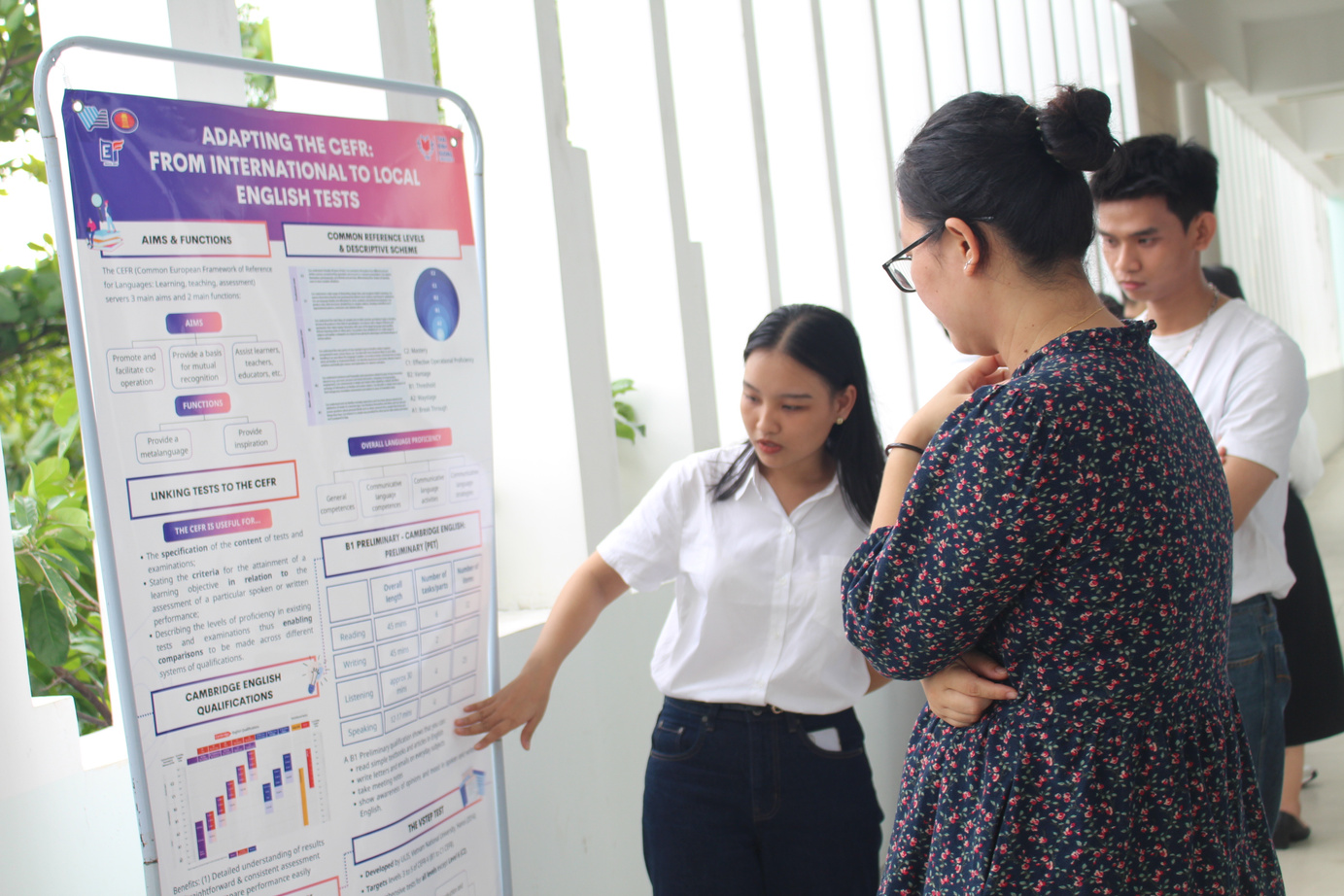
Our group members presenting the poster “Adapting the CEFR:
From International to Local English Test” at the workshop at TBDU
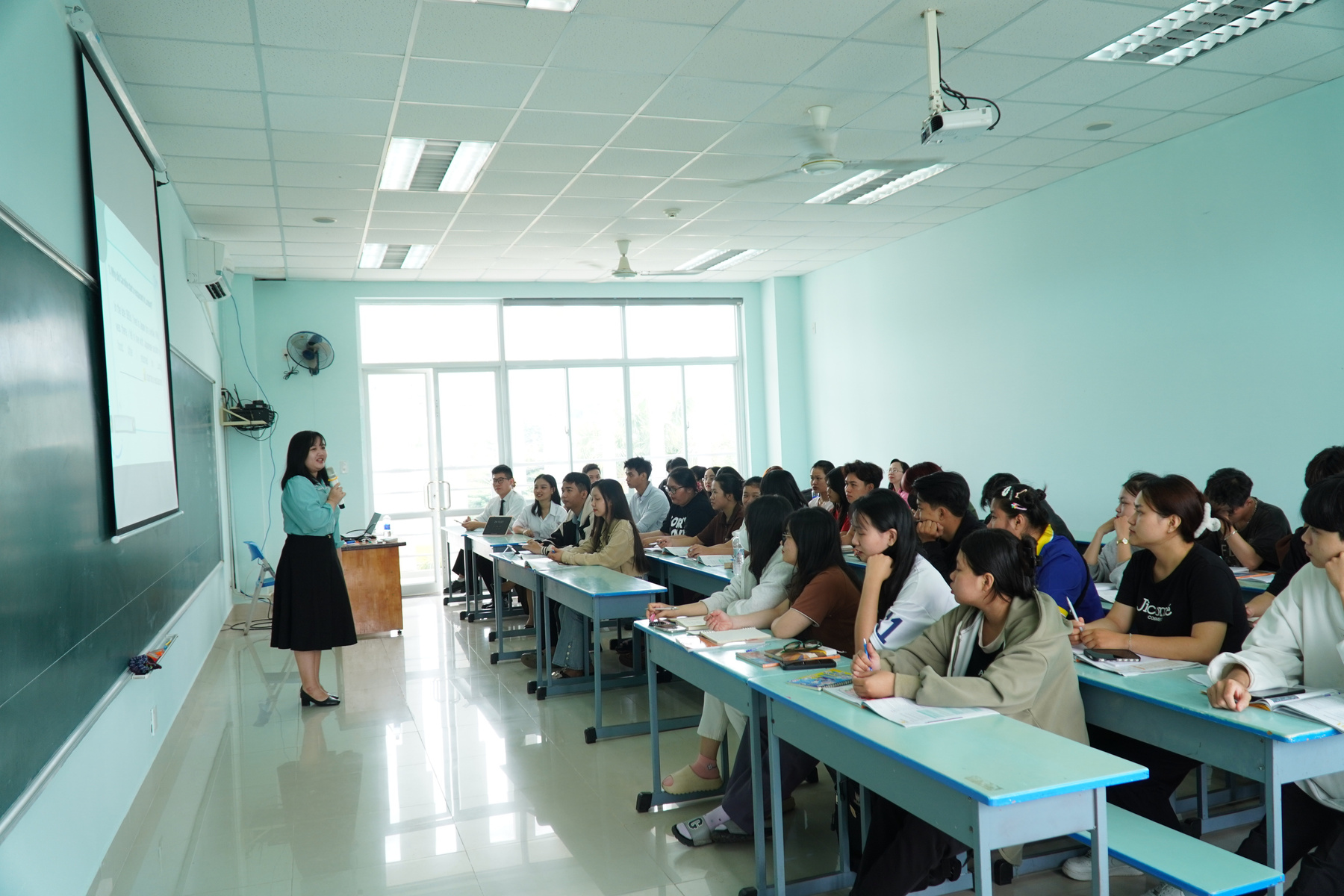
The micro-teaching session at TBDU
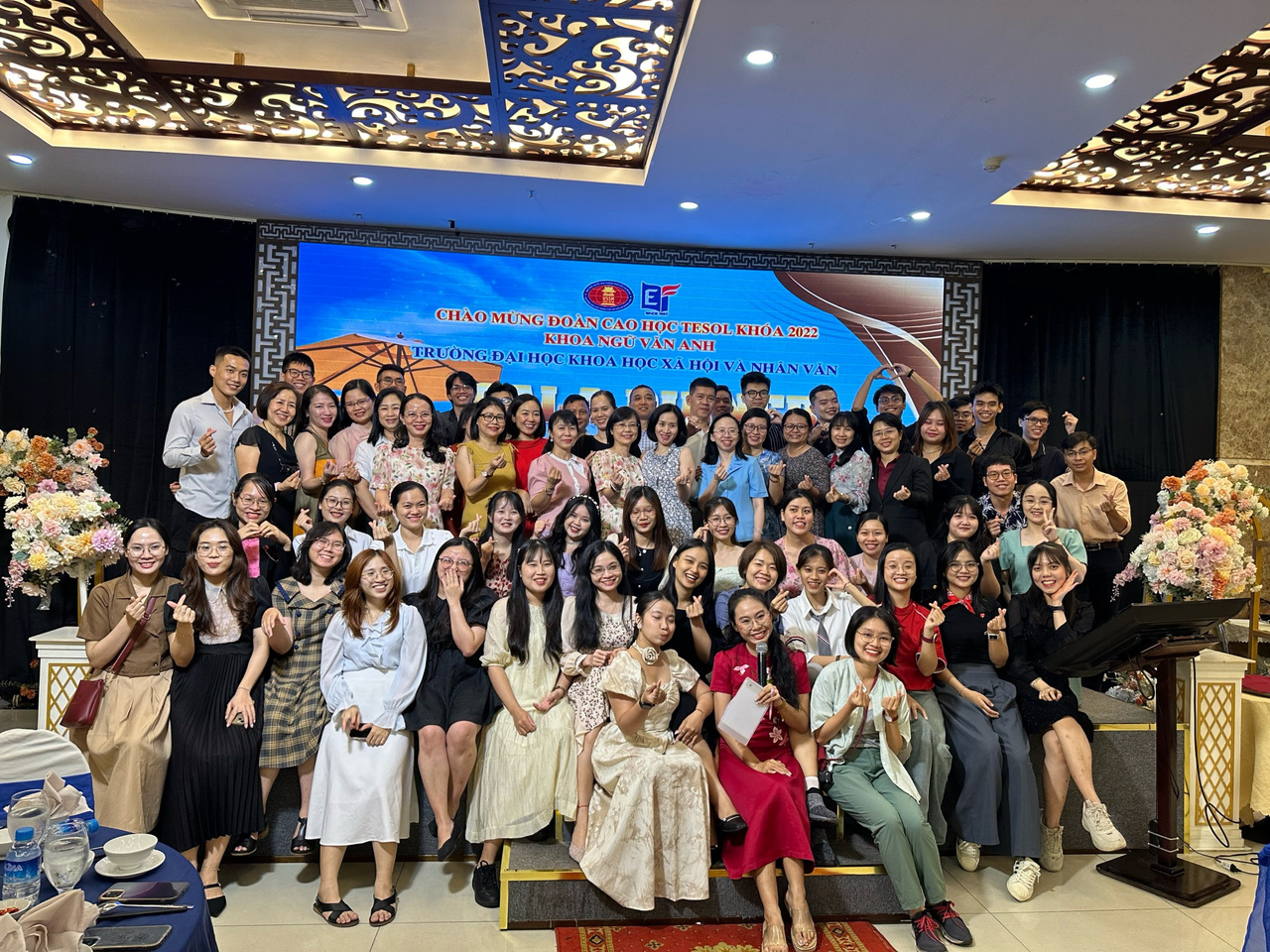
The MATESOL 2022 Practicum Group
with guests from other universities at the GALA night dinner
The Faculty of English Linguistics and Literature (EF) at the University of Social Sciences and Humanities, Vietnam National University - Ho Chi Minh City, and Thai Binh Duong University (TBDU) exemplify their dedication to their Vision, Missions, and Core Values through distinct educational philosophies and objectives. EF is dedicated to being a leading institution in learner-centered and research-oriented education, aiming to cultivate lifelong learners and global citizens. This vision is supported by missions that prioritize imparting essential knowledge and professional competencies in fields such as English language teaching, translation, interpreting, literature, and cultural studies. EF emphasizes equipping students with adaptable skills and attitudes essential for their career advancement and global integration. Core Values at EF underscore excellence, integrity, responsibility, fairness, honesty, accountability, and environmental stewardship, fostering a dynamic learning environment where students thrive and contribute positively to society.
Similarly, TBDU stands out as a distinguished coastal institution renowned for attracting exceptional faculty and promising students. It prides itself on an educational environment grounded in integrity and rigorous international standards. TBDU’s mission focuses on imparting knowledge while fostering autonomy among students, preparing them to adapt to global economic, social, and technological changes, and contributing to sustainable community development. Core values at TBDU include integrity, kindness, honesty, academic freedom, respect for diversity, responsibility, and innovation, guiding decisions and actions across the university. These values collectively define TBDU’s commitment to excellence and holistic education, ensuring students are well-prepared to meet global challenges and make meaningful contributions to society.
APPLICATION OF TESOL/ELT KNOWLEDGE
By applying ELT knowledge in general and TESOL knowledge, our group managed to thoroughly prepare and confidently present the assigned tasks throughout this practicum trip.
Advanced Teaching Methodology
Initially, we realized that the students’ proficiency levels were quite low, so we decided to implement the PPP (Presentation, Practice, Production) approach to teach vocabulary and listening skills, and to have students practice speaking about their restaurant experiences. Nunan and Carter (2001) define the PPP approach as presenting students with an explicit description of grammatical structures or rules, which are then practiced in a controlled manner before progressing to freer, communicative use. However, they also noted that students often can supply the correct form in practice exercises but struggle to use it in immediate communicative contexts outside the classroom.
Upon further research, we found that completely applying the PPP approach was challenging for students, as it required them to start from no knowledge, move through highly restricted sentence-based utterances, and then immediately produce language (Hammer, 2015). While students might complete exercises based on examples or models, this was not our desired outcome. Gatbonton and Segalowitz (1988) argue that practice can lead to the automatization of certain aspects of performance, which frees up students’ attentional resources for other tasks. We wanted students to be able to apply their knowledge in real-life situations.
Therefore, we adopted the ESA (Engage, Study, Activate) approach. In the “Engage” phase, we aim to arouse students’ interest and emotions, which is crucial for effective learning. The “Study” phase focuses on the construction of language, and the “Activate” phase encourages students to use all the language they know in communication (Hammer, 2008).
ESA is also affirmed as an effective method for teaching vocabulary, especially to small groups (Hammer, 2015). Like PPP, ESA involves engaging students, often by presenting a picture or situation to draw them in. For example, we showed students pictures with missing-letter words, which engaged their curiosity and competitiveness. During the study phase, we explained the meaning and form of the vocabulary, provided pronunciations and examples, and had students repeat and practice the language. Finally, in the activate phase, we modeled a sample speech about restaurant experiences, and then had students practice with their partners. As they became more comfortable, we encouraged them to present their experiences freely and provided productive feedback.
In addition to these teaching methodologies, we integrated several theories from our English Linguistics Course. For instance, we applied Krashen's Input Hypothesis, ensuring that the language input was comprehensible and slightly above the students’ current level (i+1). We also incorporated Vygotsky’s concept of the Zone of Proximal Development (ZPD) by providing scaffolding and support as students transitioned from controlled practice to more spontaneous use of language.
After implementing the ESA approach, we observed a significant improvement in students’ vocabulary retention and fluency. They became more engaged and confident in using the language in real-life scenarios. However, some drawbacks included the time-consuming nature of the approach and the need for continuous adaptation to maintain student interest. Additionally, a few students struggled with the transition from structured practice to spontaneous communication.
English Linguistics
In our class, we focused intensively on three core aspects of English linguistics: phonetics and phonology, semantics, and pragmatics. We dedicated time to perfecting the pronunciation of vocabulary, ensuring students could articulate English sounds accurately. Despite our efforts, we occasionally made pronunciation mistakes, but we remained aware of the importance of mastering these aspects to enhance overall language proficiency.
In terms of semantics, our goal was to deepen students’ comprehension of new vocabulary meanings. We provided clear definitions and carefully distinguished between words that may sound alike but carry distinct meanings. Through practical exercises, students applied these words in sentences, honing their grasp of contextual nuances.
Additionally, we introduced a game where students filled in vocabulary words within sentences based on context clues. This interactive approach aimed to solidify their ability to use vocabulary effectively in everyday situations, thereby enhancing their semantic skills.
While our method bolstered vocabulary retention and contextual understanding, it also presented challenges. Balancing multiple linguistic aspects proved complex, and some students struggled to apply vocabulary knowledge across diverse contexts. This highlighted the need for structured support and additional reinforcement activities to consolidate learning effectively.
Syllabus Design and Material Development
Needs analysis appears to be a prominently featured component in the literature of ELT syllabus design and materials development (e.g. Brown, 1995; Richard, 2001; Tomlinson, 2011), thus further proving its essential role in the related fields. Following a profound analysis of various definitions of needs analysis in previous literature, Richard (2001) provided his definition of needs analysis as the methodical process of gathering and examining all objective and subjective data required to establish and verify justifiable curriculum purposes that meet students' language learning needs while taking into account the unique circumstances of each educational setting that impact the teaching and learning environment. This strikes as a highly inclusive definition since it encompasses a range of relevant fundamental elements, such as curriculum purposes, students’ learning needs, and unique circumstances of a specific educational setting. Such elements are also what we kept in mind when conducting various tasks: planning the content of the poster for the workshop presentation, developing the original lesson plan for microteaching, revising and finalizing the lesson plan, and planning the content of the presentation for the seminar at Vietnam Naval Academy.
Technology-Assisted Language Learning
The utilization and integration of diverse educational technology tools within the expansive field of education have been firmly established and meticulously scrutinized in a number of academic studies conducted within the field (Rana, 2013, as cited in Kumar, 2021; Vecdi Can et al., 2012). The skills of utilizing technology tools were definitely of great help in the preparation for the workshop, where we were required to design a poster, and also the seminar at Vietnam Naval Academy, where we were challenged to adjust our PowerPoint slides to the uncommon ratio of the screen even to the very last night before the day of presentation.
Moreover, this practice proved to be indispensable for our microteaching session seeing that we were in charge of a lesson aiming at listening skill. We decided to design PowerPoint slides instead of utilizing the CPT tools provided with the assigned textbook. This helped us to enhance interaction and facilitate the class more easily as we were free to tailor them according to our plan. Regarding the use of PowerPoint slides, Perron and Stearns (2010) acclaimed that the utilization of slides enables the efficient transmission of information, affording presenters the ability to succinctly convey complex concepts and ideas. We found this characteristic of slides especially necessary to our microteaching, considering the gap between the lesson objectives and the students’ English competence. Another aspect of our microteaching session that requires the assistance of technology is the task of editing the audio for the listening exercise. After downloading the original audio, which is over 3 minutes long, we had to carefully check the proper time stamp and cut the original audio into shorter audios which matched each specific exercise and answer key for the questions. Such practice was a great help in ensuring students’ comprehension and great learning experience as well as proper management of time. We truly believe that it was not possible to conduct our microteaching without the help of technology.
By integrating the above knowledge, we managed to create a more comprehensive and effective learning environment that could better cater to a variety of needs, thus hopefully providing our students and audiences in different activities throughout this practicum trip with enjoyable experiences. Although there are quite a few things to revise and improve, we are still happy when looking back as we had put much time and effort into our work.
4.2 Individual Reflection
Nguyễn Huỳnh Anh
Nguyễn Thị Vân Anh
Reflecting on my practicum experience at Thai Binh Duong University (TBDU), I am struck by its profound impact on both my professional development and personal growth. I took on the responsibility of coordinating our nearly 50-person, 4-day-3-night trip with a tour agency, organizing a seminar on writing skills, and micro-teaching sessions with a mix of excitement and apprehension. Despite the weight of these tasks, they fueled my determination to excel.
Late-night virtual meetings became our norm, as we navigated conflicting schedules with a shared drive for excellence. Each session taught me the art of perseverance through careful planning under pressure and refining my skills in time management and collaborative teamwork. Iterative adjustments to our micro-teaching plans became routine, guiding me toward lessons that were not merely instructive but transformative. However, the true test came during our classroom observation. Our carefully planned lesson strategies, aimed at smooth execution, were met with unexpected challenges in student engagement and language proficiency levels. This humbling experience led us to adjust our approach, incorporating local examples and bilingual instructions to improve understanding. Moreover, the practicum deepened my understanding of cultural sensitivity in teaching. Accustomed to immersive English environments, I learned the delicate balance between maximizing language exposure and ensuring students’ comfort levels. The reserved demeanor of TBDU students underscored the importance of nurturing an environment where learning unfolds naturally, respecting individual paces and preferences.
Beyond these technical skills, the practicum thrust me into a leadership role when coordinating our 4-day-3-night trip with a tour agency. The aim was to meet the diverse expectations of our entire group while facilitating a seamless schedule. Navigating the logistics of our trip proved challenging from the very beginning. Originally, we planned to go to Malaysia but encountered financial difficulties, prompting us to switch to our backup plan. I had spent months contacting related parties and universities in Malaysia, but unfortunately, those efforts proved futile, leaving me quite disappointed. Despite this setback, I revived my spirits and redirected our plans toward organizing a tour to Nha Trang City. As the liaison between our group and the tour agency, I was tasked with conveying our preferences while adhering to the agency’s itinerary constraints. Initially, excitement buzzed among our cohort as we anticipated the upcoming cultural immersion. However, as the trip unfolded, so did unforeseen issues.
Balancing contrasting viewpoints required careful negotiation and diplomacy, I facilitated discussions between dissatisfied parties and the tour agency, striving to find common ground. Effective communication emerged as pivotal—not only in relaying our expectations but also in understanding the agency's logistical constraints and local expertise. Throughout this process, I learned valuable lessons in leadership and compromise. Embracing feedback and adapting plans in real-time became essential skills, ensuring a positive experience for everyone involved. By maintaining open lines of communication and a solutions-oriented approach, I mediated between differing expectations, fostering a cohesive and enjoyable trip.
Ultimately, the practicum experience extended beyond classroom teaching into real-world scenarios where cultural sensitivity and effective leadership are paramount. It reinforced the importance of flexibility and empathy in educational settings, where understanding and accommodating diverse perspectives contribute to meaningful learning experiences. As I continue my journey in education, these lessons from coordinating our practicum trip will undoubtedly shape my approach to teaching and navigating professional challenges with resilience and understanding.
Lưu Dịch Lâm
Throughout the MA TESOL program, Practicum is a valuable opportunity for me to self-reflect on my knowledge and skills which I have acquired; to improve my teaching techniques and to widen my understanding of TESOL in different contexts. During the trip, I was able to participate in various activities, such as workshop and micro-teaching at TBDU, seminar at Vietnam Naval Academy, and the GALA night, which have provided me many useful experiences and allowed me to further develop my professional skills.
Firstly, prior to the beginning of Practicum, my team had quite a difficult time planning the field trip, including micro teachings, workshops and seminars. Specifically, we were not familiar with the teaching contexts and the proficiency level of our students at TBDU in Nha Trang. At this stage, teamwork skills, planning skills and time management skills were the three most crucial skills that I highlighted for application. Despite having difficulties with the time arrangement for group meetings, constant updates for the lesson plans, workshops, and seminars, our group tried to manage the situation by discussions, consulting our professor, adjusting the plans and time limitations.
Secondly, regarding micro-teaching, flexibility and adaptability were the two notable skills which I have honed. Each time a change occurred, the responsibilities of every member shifted, and the plans had to be revised to adapt to the realistic situation and ensure everyone had an equal chance to express themselves during the trip. Besides, as things may not always go as planned, it is important to hold the idea of adaptability, which was truly reflected in the unexpected situations in the trip. For example, the actual level of the students and the time constraint for micro-teaching were different from our expectations, thus we needed to adjust and rehearse regularly to match the updates. Thanks to the observations, we were able to simplify the language use in all contents, considering how much Vietnamese instruction we should integrate into our lesson, using examples that are familiar to the students and games that motivate them; which helps our students to understand our lesson to their fullest extent. Also, with respect to classroom management, I noted that if there is an odd number of students in a pair-work activity, a group of three students should be formed so that the teacher can move around and observe his class best.
Thirdly, the seminar and GALA have really broadened my perspectives as a teacher by highlighting the importance of cultural variations in the context of English language teaching and learning. At first, I was quite nervous as this was my first time conducting a seminar at an academy, and I was worried about the audience reactions to my speech. However, having seen the former groups’ presentations, I felt more confident as the audience were energetic and cooperative. Having a chance to work with a large number of audience members from all walks of life has developed my cultural competency skills. Generally, the stakeholders in Practicum have raised my awareness of cultural diversity and helped me learn how to apply it into my English classroom. For instance, classroom management, classroom activities and instructions may differ significantly depending on the students’ backgrounds, learning styles, and learning environment.
Finally, upon completion of the program, Practicum was truly an invaluable experience to further my teaching career by equipping me with essential professional skills and widen my knowledge about different perspectives of ELT. All the lessons and challenges I encountered in this trip helped me develop myself by honing the teamwork skills, planning skills, time management skills, flexibility, adaptability, and cultural competency skills; and I am looking forward to applying this knowledge to my teaching career.
Tạ Hạnh Diễm
This practicum trip provided a valuable opportunity to develop and reflect on various professional skills. Through practical teaching experiences and collaborative activities, I was able to identify my strengths as well as areas for improvement.
As I observed our group’s microteaching session, I had a chance to challenge my own analytic skills to assess my group members’ microteaching presentations and consequently learn more from both their strengths and shortcomings. As a team, we achieved certain notable accomplishments such as: completing the lesson plan efficiently without exceeding the allocated time; successfully overcoming several anticipated difficulties, such as a possible lack of student engagement as well as their unsuccessfully finishing the listening exercise due to their relatively low competence. However, there were shortcomings that highlighted areas for improvement. These include the overall fast speed of speaking for all team members including me. Several other noteworthy points that I have learnt from our individual performance are: as noted from my section, to highlight the knowledge that is useful for the following sections, such as certain vocabulary; to pay more attention to the tine-management skills and to avoid a dependence Vietnamese in instructions even in case of students with low levels, as observed in Van Anh’s section; to notice when to play and pause audio when correcting listening exercise to support students better, as observed in Huynh Anh’s section; to always check the necessary knowledge related to the lesson, such as the vocabulary pronunciation, carefully, as observed in Dat’s section; class-management skills, particularly in arranging pair work, as observed in Lam’s section. Due to various objective factors, our microteaching has much room for improvement. Nevertheless, I still personally feel proud of our group’s performance in the microteaching session.
Besides microteaching, we were required to prepare for a range of other activities, which was quite a challenge for my planning skills. During the microteaching sessions, I honed my planning skills significantly, as can be seen from the extensive changes in our lesson plan. One specific challenging task in the process of planning the lesson for both my team members and me was that we had to carefully divide the lesson parts, paying close attention to the duration of audio materials used and concurrently ensuring a reasonable teaching time allotted to each member. Additionally, organizing workshops taught me the importance of arranging posters in a standee format for better visibility and engagement. One of the most exciting experiences was participating in the Gala, where I learned to select songs and perform, which was a new and enriching experience for me.
Effective communication was another crucial aspect during the practicum, especially when working under time pressure. This was particularly evident when Van Anh was busy planning for the entire group, and team members had conflicting teaching schedules. Despite these challenges, we managed to communicate effectively, ensuring that everyone was on the same page and tasks were completed on time.
The aforementioned time pressure also led to a challenge in terms of leadership skills. Throughout the practicum, I actively proposed and took on several responsibilities instead of waiting passively for the leader to assign tasks. This proactive approach was something I had developed during my MA course, considering the high competence of my classmates and our tight work schedules. However, the teamwork for this practicum was like a more intense experience of such practice, especially when our leader was also in charge of excessive responsibilities of planning the field trip for our whole cohort. This experience truly highlighted the need for effective leadership and shared responsibilities within the team.
Another valuable experience that I gained from this practicum trip was my first time interacting with students from different cultural backgrounds. Initially, I, as well as other team members, had limited interactions with them and did not get to know them well until the teaching days approached. This lack of prior interaction posed a challenge, but it also provided an opportunity to enhance my cultural competency skills to adapt to new social environments.
The practicum also had an influence on my behaviors and perception. As can be seen from the above reflection, one noteworthy highlight of the whole trip was surely our microteaching. Conducting a demo class under the pressure of limited preparation time and unfamiliar materials tested my adaptability and resilience, ultimately broadening my teaching skills and providing invaluable practical experience. Furthermore, during this trip, I had the opportunity to interact with numerous experts in the field. Engaging with seasoned professionals allowed me to gain valuable insights into the latest teaching methodologies and strategies. These interactions not only expanded my professional knowledge but also provided me with practical knowledge that I could immediately apply in the classroom.
Overall, to me, ‘a roller coaster of emotions’ would be a phrase I relate to when looking back at this practicum trip. It reinforced the importance of flexibility, continuous learning, and the ability to quickly adapt to new teaching environments. These experiences have made me more confident in my teaching abilities and more prepared to handle the dynamic nature of the educational field.
Nguyễn Thành Đạt
My practicum at Thai Binh Duong University (TBDU) and the Naval Academy (NA) in Nha Trang City was a deeply enriching experience that allowed me to grow both personally and professionally. Comparing the students in TBDU with those in Ho Chi Minh City, where I also teach contemporary, revealed distinct learning preferences and cultural influences. At TBDU, students tended to be more reserved and hesitant to participate actively in class. Recognizing this, I focused on fostering a supportive classroom atmosphere through small group activities and peer discussions to empower students to overcome initial shyness and engage more confidently. This experience deepened my understanding of effective teaching practices and underscored the importance of cultural sensitivity in creating inclusive learning environments.
Furthermore, at TBDU, I observed that many students relied heavily on Vietnamese explanations for grammar concepts, highlighting their challenges with English-only instruction. This realization prompted me to adjust my teaching methods to better support their learning. Implementing activities like micro-teaching lessons and workshops taught me the importance of thorough preparation and creating engaging sessions. Despite occasional struggles with time management and lesson engagement, each misstep served as a valuable lesson in humility and perseverance, reinforcing my commitment to continuous improvement.
Throughout this journey, my communication skills flourished as I learned to articulate concepts clearly and engage effectively with students and colleagues. Presenting at workshops and navigating Q&A sessions bolstered my confidence in public speaking, a skill I continually strive to enhance. Joining the GALA show as a performer was also a highlight, providing me an opportunity to connect with the community on a deeper level and share in their enthusiasm.
Reflecting on my practicum, I am grateful for the growth it has brought me. Engaging in micro-teaching, workshops, and seminars sharpened my ability to facilitate meaningful discussions and create impactful learning experiences. Learning from experienced educators and embracing feedback refined my teaching methods, making them more student-centered and effective. Embracing challenges and learning from mistakes has been integral to my journey, reinforcing my dedication to becoming a compassionate and supportive educator.
In conclusion, my practicum was a transformative experience that deepened my understanding of teaching and learning. I am humbled by the lessons learned and eager to continue growing as an educator who fosters curiosity, resilience, and a love for learning in every student I teach.
REFERENCES
- Brown, J. D. (1995). The elements of language curriculum – A systematic approach to program development. Boston: Heinle & Heinle Publishers.
- Gatbonton, E., & Segalowitz, N. (1988). Creative automatization: Principles for promoting fluency within a communicative framework. TESOL quarterly, 22(3), 473-492.
- Harmer, J. (2015). The practice of English language teaching (With DVD). Pearson.
- Harmer, J. (2008). How to teach English (Vol. 62, No. 3, pp. 313-316). Oxford University Press.
- Kumar, T., Malabar, S., Benyo, A., & Amal, B. K. (2021). Analyzing multimedia tools and language teaching. Linguistics and Culture Review, 5(S1), 331-341. https://doi.org/10.37028/lingcure.v5nS1.1400
- Nunan, D., & Carter, R. (Eds.). (2001). The Cambridge guide to teaching English to speakers of other languages. Cambridge university press.
- Perron, B. E., & Stearns, A. (2010). A review of a presentation technology: Prezi. Research on Social Work Practice.
- Rana, P. S. (2013). Education and the Use of Technology. Republica The Week, 12.
- Richards, J. C. (2001). Curriculum development in language teaching. Cambridge: Cambridge University Press.
- Tomlinson, B. (2011). Materials development in language teaching. Cambridge: Cambridge University Press.
- Vecdi Can, A., Karaca, N., Akyel, N. and Demirci, S. D. (2012). Evaluating the Fitness of Lecturing with PowerPoint Presentation for Accounting Education – research at Sakarya University. Social and Behavioral Sciences, 55, 128-137.
APPENDICES
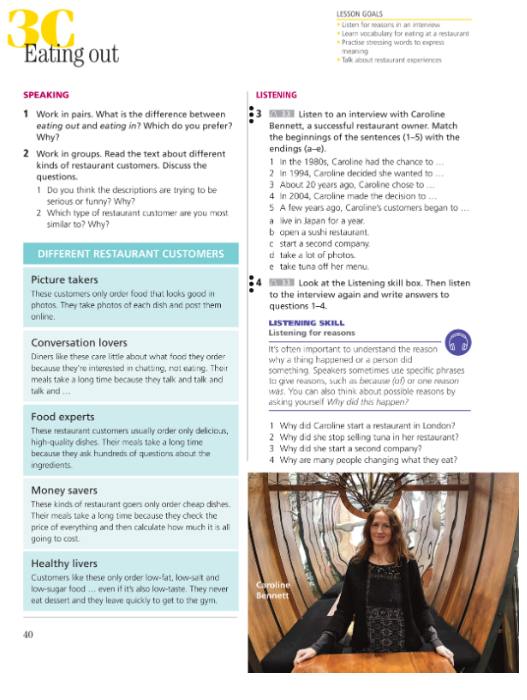
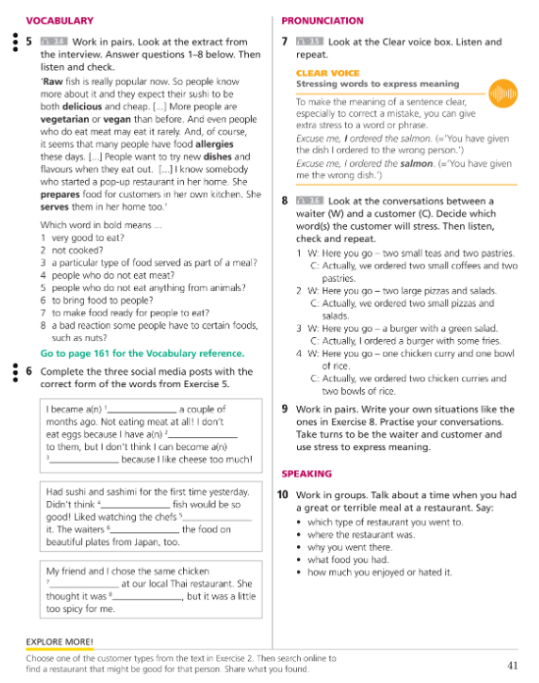
Appendix A: The textbook for micro-teaching (page 40-41)
Appendix B: Answer key for listening tasks
Task 3: 1-a 2-b 3-e 4-c 5-d
Task 4:
- She could not find good sushi.
- There are few tuna left in the oceans.
- She wanted to connect restaurants and people who catch fish.
- They want to be healthy and help protect the environment.
Appendix C: Audio script for listening tasks 3 and 4
I = Interviewer, C = Caroline
Yellow = Key for task 3; Blue = Key for task 4
I: Today we’re talking to successful businessperson Caroline Bennett. Caroline runs a sushi restaurant in London. Tell us about that, Caroline.
C: Hi there. Sure. In the late 1980s, I lived in Japan for a while1. While I was there, I fell in love with Japanese society and food. After I returned to London, I was looking for good sushi but I couldn’t find it, so I started a restaurant1. People say most restaurants close after five years. Well, I started Moshi Moshi Sushi in 1994 was difficult sometimes, of course, especially in the last few years. Still, we’re doing OK.
I: That’s great! Are things different now compared to 1994?
C: Yes, very different! We are always trying to improve because our customers expect it. In 1994, few people in London were eating sushi, but raw fish is really popular now. So, people know more about it and they expect their sushi to be both delicious and cheap.
I: Sounds hard! And how’s your restaurant different from other sushi restaurants?
C: Well, one thing is that we try to do the right thing for the planet. When people think about sushi, many think about eating tuna. About twenty years ago, though, I found it was very hard to get tuna2. The reason shocked me. It was hard to get because there are so few bluefin tuna left in the oceans2. When I learned that, I took bluefin tuna off the menu3.
I: What did your customers think?
C: Some were unhappy, but it was the right thing to do for the environment. In fact, I decided to sell only environmentally friendly fish. It was hard to find, though, so about ten years after I started Moshi Moshi, I started another company4 that connects people who catch fish and the restaurants that sell it3.
Appendix D: Questions and key for the vocabulary game
Example: Which of the following words has the same meaning as “very good to eat” or “tasty”?
A. dessert
B. delicious
C. low-sugar
D. vegan
Write a word that has a similar meaning to the word in bold in the following sentence.
Sushi, a traditional Japanese dish famous worldwide, is often prepared with uncooked fish.
→ Raw
Choose the correct answer A, B, C or D.
My friend has a peanut ________, so when she visits, I make sure to cook meals that do not include peanuts.
A. ingredient
B. allergy
C. dessert
D. dish
Write a word that has a similar meaning to the word in bold in the following sentence.
At the restaurant, I ask for a low-fat salad because I am trying to eat less fat.
→ ordered
Which of the following words means “to make food ready for people to eat”?
A. Serve
B. Prepare
C. Order
D. Present
Match the pictures (1-3) to the correct words (a-c).
a) food for vegans b) food for vegetarians
→ 1b; 2a
Match the following sentence with THE MOST appropriate sentence from A to C.
“We usually put all the food on the table.”
A. Can I have the recipe, please?
B. My face goes red when I eat them.
C. We like to serve ourselves.
Fill in the blanks with two words from the box. Use an appropriate form.*
allergies prepare raw dishes delicious
My friend and I chose the same chicken _____________ at our local Thai restaurant. She thought it was _______________, but it was a little spicy for me.
→ dish; delicious